


On April 18, 2018, the Government issued Decree No.58/2018/ND-CP on agricultural insurance. The Decree took effect since June 5, 2018.
Accordingly, Decree No.58/2018/ND-CP regulates the type of risk supported by agricultural insurance and the level of support as follows:
1. The type of risk supported by insurance includes:
– Natural disaster: natural disaster must be announced or certified by competent state agencies;
– Disease: Animal disease or plant pests. The disease must be announced or certified by competent state agencies.
2. Level of agricultural insurance support
– Individuals engaged in agricultural production belong to poor or near poor households: To support up to 90% of agricultural insurance premiums.
– Individuals engaged in agricultural production not being poor or near poor households: To support up to 20% of agricultural insurance premiums.
– Organizations engaged in agricultural production in the model of cooperation, integration, large-scale production and application of advanced science and technology to production towards clean agriculture, high technology, friendly environment: To support up to 20% of agricultural insurance premiums.
With detailed and specific regulations, it can be seen that Decree No.58/2018/ND-CP aims to ensure the benefits and welfare of people working in the agricultural sector, thereby stabilizing the person life and promoting the sustainable development of agriculture.
On May 14, 2018, the Government issued Decree No.67/2018/ND-CP detailing some articles of the Law on Irrigation. The Decree took effect since June 22, 2018.
Accordingly, Decree No.67/2018/ND-CP stipulates types of permits for activities within the irrigation works’ protection area, including:
- Construction of new works;
- Setting up wharves and yards for gathering raw materials, fuel, materials, supplies and means;
- Drilling, excavating geological survey; to explore, exploit minerals, construction materials, exploit underground water;
- Discharging waste water into irrigation works, excluding the discharge of waste water on a small scale and containing no toxic substances and radioactive substances;
- Planting perennial trees;
- Tourism, sports, scientific research, business and service activities;
- Activities of inland waterway means, motorized means, except for rugged motorbikes, mopeds and rudimentary inland waterway means;
- Aquaculture;
- Explosion and other explosive activities;
- Construction of underground works.
Therefore, Decree No.67/2018/ND-CP stipulated some new types of permits in comparison with previous documents, raising the capacity requirements of organizations and individuals who participated in activities within the irrigation works’ protection area, thus protecting water sources and aquatic resources.
At a conference in Hanoi, on May 15, on the Vietnamese economy’s outlook for 2018 and to 2020, Minister of Planning and Investment Nguyen Chi Dung highlighted the good socio-economic performance in the first months of 2018, especially the GDP growth of 7.38%, the highest rise in a first quarter in 10 years. The macro-economy was kept stable, and inflation was under control.
The average consumer price index (CPI) in the first four months of 2018 rose 2.8%. The monetary market and the banking system remained stable with the system’s liquidity ensured, he said.
The Minister added that disbursement of foreign direct investment was estimated at US$5.1 billion, up 6.3%. The number of newly-established enterprises was over 41,200, with combined capital of approximately VND 412 trillion.
Total import-export revenue in the period was estimated to hit US$73.76 billion, a rise of 19% annually, with a trade surplus of roughly US$3.39 billion.
President of the Vietnam Association of Foreign Invested Enterprises (VAFIE) Nguyen Mai held that foreign investment (FDI) has played an important role in the Vietnamese economy. Last year, the FDI disbursement reached a record figure of US$17.5 billion. He predicted that FDI disbursement this year may hit US$19 billion.
Meanwhile, Warrick Cleine, President and General Director of KPMG Vietnam asserted that foreign investors are becoming more confident in the Vietnamese economy. A number of forecasts by international organisations put the country’s average GDP growth in the 2018-2020 at around 6.85% and even 7% in some years.
However, Minister Dung said the Vietnamese Government has been highly aware of the possible impacts by the economy’s internal problems and outside influence.
The country aims for fast and sustainable economic growth on the basis of making full use of humankind’s science-technology advances, especially from the 4.0 industrial revolution, towards the goal of a modern industrialised country with an advanced market economy.
Minister Dung also highlighted the need for the joint efforts of all sectors at every level, as well as all economic players, in maintaining the growth trend not only in 2018 but also in the following years.
Source: nhandanonline
Vietnam is drafting a bill for the operation of three special economic zones that includes land rental and tariff exemptions for investors, but some members of the country’s legislative National Assembly think the bill is unnecessary.
Legislator Le Thanh Van said at a Wednesday meeting in Hanoi that the special economic zones (SEZs), Van Don in Quang Ninh, Bac Van Phong in Khanh Hoa and Phu Quoc in Kien Giang, already lie in favorable locations in the north, south and center of the country. The government has invested significantly in infrastructure in the three areas so more preferential treatment for investors in terms of tax and land rental is unnecessary, said Van.
The bill exempts investors from land lease fees for less than 70 years, and in some cases, the term can be extended to less than 99 years with permission from the prime minister. Van argued that the terms were too long given that all three zones stand in “sensitive positions for national security and defense.”
He pointed out that what is more important for investors at these special zones is transparency from local authorities.
“If the authorities are corrupt and make it difficult for businesses then the sum that investors have to spend on unofficial fees can be even higher than their tax and land lease fees,” said Van.
Parliament member Phan Nguyen Nhu Khue shared Van’s opinion.
He said the assembly should reconsider the lease term because “99 years is way too long and what will future generations do if there are problems with national security and defense in those areas?”
The assembly’s deputy chairman Uong Chu Luu said the it will continue working on the draft bill and open it for further discussions at a meeting on May 20.
According to the plan, the Van Don SEZ will focus on high tech, supporting industries, tourism and services, creating jobs for 132,000 people and contributing $4 billion to the state budget between 2021 and 2030.
The Bac Van Phong SEZ will specialize in information-technology, electronics, mechanics, logistics, tourism, and finance. It should generate 65,000 jobs and $2.2 billion for the state budget from 2021-2030.
The Phu Quoc SEZ will lure investors in tourism, services and healthcare with a workforce of 57,600, and bring in about $3.3 billion in the same period.
Source: e.vnexpress.net
According to the Bloomberg news, the large corporations as Samsung, Intel have poured money into the factories in Vietnam leading Southeast Asian countries to emerge as new tiger in Asia. After renovation in the 1980s, Vietnam’s economy has grown rapidly, exceeding 7% before leveling off in recent years due to the increase in bad debt from the state sector.
Not only is the Southeast Asian nation gaining ground as a cheaper manufacturing alternative to neighboring China, Vietnam is also a politically palatable destination for Japanese firms boosting investment in the region amid recurring China-Japan spats.
“It is quite possible that Vietnam could become the fastest-growing economy in Asia,” said Vikram Nehru, a senior associate in the Asia Program and Bakrie Chair in Southeast Asian Studies at the Carnegie Endowment for International Peace in Washington. “It has all the ingredients for rapid growth if it can address the challenges in the state sector.”
Mekong Star
Signs of Vietnam’s growing clout are gathering: In 2014 the country overtook regional counterparts to become the biggest exporter to the US from the Association of Southeast Asian Nations, or ASEAN, muscling ahead of its more established manufacturing rivals of Thailand and Malaysia.
Disbursed foreign investment in Vietnam has soared in the past 14 years to reach US$12.35 billion in 2014, up 7.4 % from 2013 and compared with US$2.4 billion in 2000, figures from the Foreign Investment Agency show. Samsung’s operations in the country are growing so big that it got government approval to operate its own terminal at Hanoi’s Noi Bai International Airport.
And manufacturers are shifting from China. Japanese printer maker Kyocera Document Solutions Inc., a unit of Kyocera Corp., plans to quadruple its annual printer production in Vietnam to 2 million units by March 2018, the company said this month. Part of its operation in China will be moved to Hai Phong, making Vietnam the company’s biggest manufacturing base for printers, with another plant planned by August, it said.
“Vietnam will displace Thailand as the greater Mekong star,” said Tim Condon, head of Asia research at ING Groep NV, referring to the Mekong River basin region that includes the nations of Cambodia, Laos, Myanmar, Thailand and Vietnam, along with China’s Yunnan province.
Exports from Thailand, one of the nations dubbed by analysts and the media as a rapidly developing tiger economy before the 1997-98 Asian financial crisis, have contracted in the last two years. By contrast, Vietnam in 2014 saw its shipments overseas jump almost 14 %.
Australia & New Zealand Banking Group Ltd. this month upgraded Vietnam’s GDP forecast to 6.5 % for this year and next, citing strengthening retail sales, accelerating industrial production and improving construction. “The economy’s structure is shifting, it is moving from agriculture to manufacturing,” said Victoria Kwakwa, the World Bank’s country director for Vietnam. “You can see there is a progression happening.”
‘Big Winner’
“Vietnam is really the big winner from China losing its competitiveness because of rising wages” and a strong currency, said Frederic Neumann, co-head of Asian economics research in Hong Kong at HSBC Holdings Plc. “By moving very early into the space vacated by China, Vietnam has first-mover advantage and it is now starting to show.”
Vietnam’s annual real gross domestic product growth could average 5.3 % in the 2014-50 period, a pace only bettered by Nigeria, according to PwC’s “The World in 2050” report. Growth in China may fall below 4 %. Vietnam’s benchmark stock index has climbed 5.5 % this year, compared with Indonesia’s 4.1 % increase, Malaysia’s 2.4 % and Thailand’s 2.2 %.
Demographics are a big help. Some 13 % of China’s population in 2012 was already 60 or older, compared with 9 % in Vietnam, according to the United Nations. More than 40 % of Vietnam’s population of about 90 million in 2013 was in the labor force aged 15 to 49, government data show.
The average monthly wage in Vietnam was US$197 in 2013 compared with US$391 for Thailand and US$613 for China, according to International Labour Organization calculations. That disparity is widening. The Economist Intelligence Unit predicts that in 2019, manufacturing labor costs per hour in China will be 177 % of those in Vietnam, up from 147 % in 2012.
Bad Loans
John Hawksworth, one of the authors of the PwC report, said that lenders in Vietnam are creaking under bad loans, and the government has struggled to overhaul inefficient state-owned companies. Inadequate infrastructure, skills gaps and corruption remain risks. Vietnam ranked 119 out of 175 countries and territories in the 2014 Corruption Perceptions Index. China came in at 100th place. Meanwhile, other Southeast Asian countries such as the Philippines and Malaysia are also competing to win manufacturing jobs.
“It’s not guaranteed that Vietnam will fulfil its potential,” said Hawksworth. “Part of it is that Vietnam is simply in a good geographic location and part of it is that it does have some catching up to do in terms of GDP per capita.”
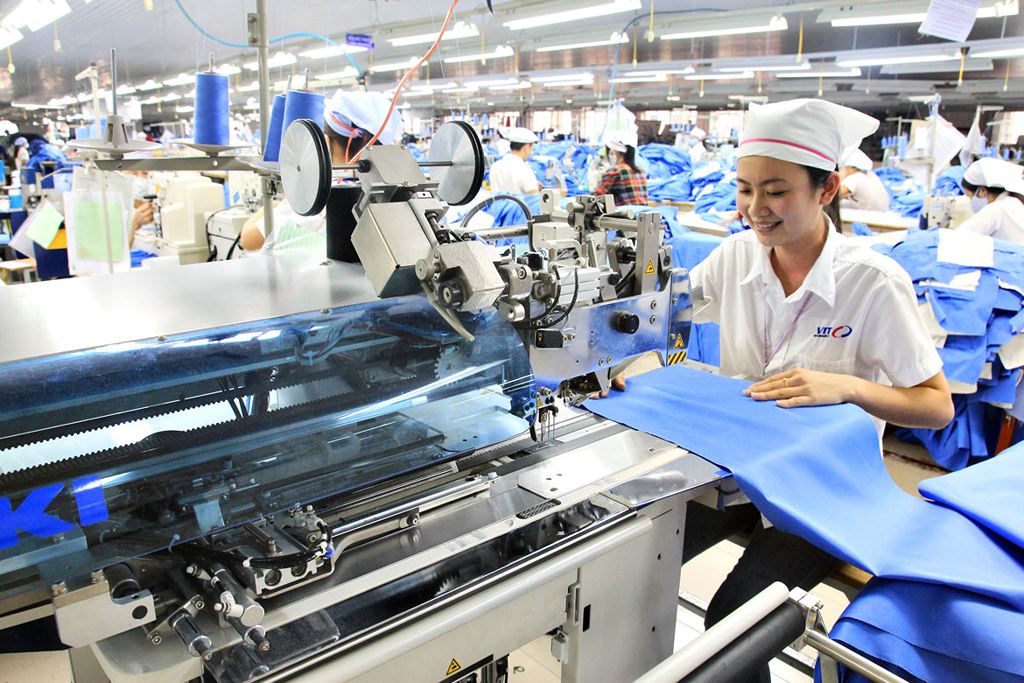
Much of the work being transferred to Vietnam is in low-end manufacturing as China moves up the value chain: labor-intensive work in textiles, garments, furniture and electronics. Meanwhile, China is gradually improving value. “The productivity of Vietnam’s manufacturing sector is very low,” Karel Eloot, Shanghai-based director at McKinsey & Co.’s Asia Operations Practice, said in November. “That’s the biggest blowback for further expansion in Vietnam.”
However, the government is working on some of the economy’s biggest millstones. Vietnam will attempt to sell a record amount of shares in state-owned companies this year, a deputy general director of the finance ministry’s corporate finance department, said in an interview March 13. The plan to sell stakes in about 280 entities this year is “credit positive” for banks, Moody’s Investors Service said.
There are other positives. Vietnam is in talks on a free trade deal with the European Union and is part of the Trans-Pacific Partnership.
Source: Dan Tri newspaper
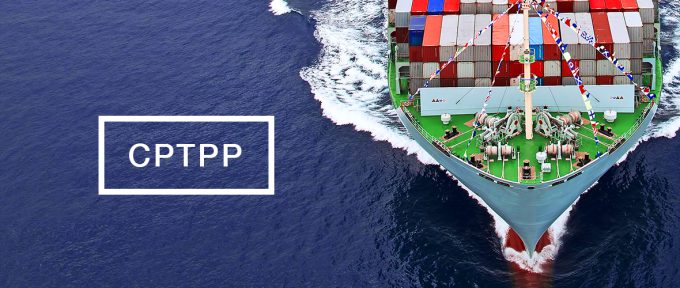
Vietnam’s fishery sector will gain advantages and export opportunities once the Comprehensive and Progressive Agreement for Trans-Pacific Partnership (CPTPP) and the European Union-Vietnam Free Trade Agreement (EVFTA) take effect.
Vuong Duc Anh, from the Ministry of Industry and Trade’s Department of Export-Import, said the CPTPP and EVFTA are new-generation trade deals with trade facilitation as a core value via cutting tariffs.
Under the EVFTA, aquatic products, excluding canned tuna and fish balls, will enjoy a zero tax for a maximum of seven years. While under the CPTPP, Canada and Peru will cut taxes to zero percent once the deal takes effect. Other countries will offer tax reductions in accordance with roadmaps.
Anh said the signing of the EVFTA and CPTPP will afford Vietnamese fishery firms chances to expand export markets, especially new markets such as Canada, Peru and Mexico, given that Vietnam’s rivals Thailand and China have yet to sign the FTAs with the European Union and have yet to join the CPTPP.
Vietnam now ranks second globally in terms of shrimp exports with a market share of 14 percent, behind India (15 percent). India has yet to join the CPTPP while its FTA negotiations with the EU have been stalled.
According to experts, Vietnamese aquatic firms will also have chances to improve technology and product quality, join the regional supply chain and diversify materials supply sources. In particular, signing new-generation FTAs also requires the State to reform mechanisms, thereby creating a stable and transparent business environment.
However, domestic enterprises also face competition with foreign rivals and stringent regulations on product quality and trace of origin. Therefore, they need to build business plans for medium and long term and renew technologies to join the global value chain for sustainable growth.
Source: VASEP
- When we last met in Hanoi, Vietnam, on May 21, 2017, the ministers of Australia, Brunei Darussalam, Canada, Chile, Japan, Malaysia, Mexico, New Zealand, Peru, Singapore and Vietnam reaffirmed the balanced outcome and the strategic and economic significance of the Trans-Pacific Partnership Agreement signed in Auckland, New Zealand, on February 4, 2016, (hereinafter referred to as “the TPP”) highlighting its principles and high standards as a way to promote regional economic integration, contribute to the economic growth prospects of its member countries and create new opportunities for workers, families, farmers, businesses and consumers.
- In May, ministers tasked officials with engaging in a process of assessing options to bring the comprehensive, high-quality agreement into force expeditiously. Over the past several months, officials have worked to reach a balanced outcome that maintains the significant benefits of the TPP.
- Ministers are pleased to announce that they have agreed on the core elements of the Comprehensive and Progressive Agreement for Trans-Pacific Partnership (CPTPP). Ministers agreed to Annex I and II, which incorporate provisions of the TPP, with the exception of a limited set of provisions, which will be suspended. The annexes also incorporate a list of four specific items on which substantial progress was made but consensus must be achieved prior to signing.
- Ministers agree that the CPTPP maintains the high standards, overall balance and integrity of the TPP while ensuring the commercial and other interests of all participants and preserving our inherent right to regulate, including the flexibility of the parties to set legislative and regulatory priorities. Ministers also affirm the right of each party to preserve, develop and implement its cultural policies. Ministers consider that the CPTPP reflects the desire of the parties to implement the TPP outcomes among themselves.
- Ministers confirm that the legal instrument proposed for the CPTPP allows the participants to act decisively in a timely manner to advance their shared objectives. Ministers reaffirm that the CPTPP demonstrates their firm commitment to open markets, to combatting protectionism and to advancing regional economic integration.
- Noting Article 6 of the CPTPP, ministers share the view that the scope of a review may extend to proposals to amend the CPTPP to reflect the circumstances concerning the status of the TPP.
- Furthermore, ministers decided that all the TPP side letters signed among the 11 countries will be maintained in principle, unless the relevant parties decide otherwise.
- Ministers tasked officials with continuing their technical work, including continuing their efforts toward finalizing those items on which consensus has not yet been achieved, as well as legal verification of the English text and translation to prepare finalized text for signature.
- Ministers recognize that each country will need to pursue its own domestic processes, including public consultation, in advance of signing.
Source: international.gc.ca
On May 12, 2018, the Government issued Decree No.66/2018/ND-CP regulating the priority regime for officials, public servants and employees of the State Audit. The Decree took effect since July 1, 2018.
Accordingly, Decree No.66/2018/ND-CP stipulates the priority regime for officials, public servants and employees of the State Audit as follows:
- Annually, based on the results of implementation of audit proposals, the State Audit shall be entitled to deduct 5% on the total of money detected and proposed by the State Audit as prescribed. The State Audit shall use the fund of 5% to cover the following expenses: Expenses for encouraging and rewarding officials, public servants and employees of the State Audit shall not exceed 0.8 times the salary is determined by the State.
- The remaining funds after spending incentives and bonuses for officials, public servants and employees of the State Audit shall be used to invest in material foundations and increase the operation capability of the State Audit.
It can be seen that Decree No.66/2018/ND-CP contains specific and clear regulations on priority regime for officials, public servants, employees and laborers of the State Audit, thereby showing clearly interest and encouragement for these people in order to improve the morale and quality of life for the employees, contributing to ensuring the legitimate rights and interests of the employees.
On May 10, 2018, the Prime Minister issued Official Letter No.602/TTg-CN on a number of measures to strengthen the state management for activities of exploiting, trading and export of sand resources.The Official Letter took effect from the date of its promulgation.
Accordingly, the Prime Minister hereby guides the following specific contents:
- Not exporting raw minerals (including sand); only export of deeply processed and valuable products. For silica white sand and yellow sand for casting, but have signed export contracts with foreign partners before September 15, 2017, in accordance with current export laws is permited to continue exporting.
- The Ministry of Construction shall assume the prime responsibility, coordinate with concerned agencies in evaluating the overall supply and demand of silica sand in the world and in the domestic; to coordinate with the Ministry of Natural Resources and Environment in proposing solutions to exploit, process and use effectively and sustainably for socio-economic development; to promptly adjust the planning on the exploration, exploitation and use of minerals for use as construction materials and submit them to the Prime Minister for consideration and decision.
- The Ministry of Construction need agree with the Ministry of Justice on study and elaboration of legal documents on conditions for export of minerals to be used as construction materials in accordance with regulations; to assume the prime responsibility and coordinate with the Ministry of Finance and concerned agencies in formulating mechanisms and policies on taxes, thus creating legal grounds for the management of sand resources.
- The Ministry of Natural Resources and Environment shall coordinate with the Ministry of Construction and concerned ministries in studying the overall planning of minerals, including sand.
It can be seen that, through the issuance of Official Letter No.602/TTg-CN, the Prime Minister has specific and timely guidance, thereby contributing to improving management effectiveness of State agencies for the exploitation and use of sand resources is suitable with the social demands, at the same time ensuring the reduction of adverse impacts on the environment.
On May 15, 2018, the Government issued Resolution No.19/2018/NQ-CP stipulating the continuation of major tasks and solutions to improve the business environment, enhance competitiveness. the year 2018 and the following years. This Resolution took effect from the date of its promulgation.
Accordingly, Resolution No.19/2018/NQ-CP provides details on the change of competitive environment of the 25 functional agencies in terms of improving their competitiveness, in which the tasks of the Ministry of Planning and Investment are as follows:
- To assume the prime responsibility and coordinate with the Ministry of Finance, the Ministry of Labor – Invalids and Social Affairs, the Vietnam Social Insurance and concerned agencies in improving the index of business start-ups strictly forward set target;
- To propose at least 50% reduction of information disclosure fee;
- To assume the prime responsibility and coordinate with the concerned ministries and agencies in drafting the Law on amending and supplementing a number of articles of the Investment Law and the Enterprise Law by June 2019;
- To assume the prime responsibility and coordinate with the Ministry of Justice, the Government Office and concerned ministries, reporting to the Government for submission to the National Assembly Standing Committee of the list of business lines which have been excluded from the list of conditional business lines;
- To assume the prime responsibility and coordinate with the Supreme People’s Court to publish information on bankruptcy cases and the list of creditors at the National Business Information Portal.
Thus, it can be seen that Resolution No.19/2018/NQ-CP introduced the orientation to reduce the business conditions as well as the fee in information disclosure activities of enterprises, thereby expanding the rights of business freedom, enhance competitiveness and attract investment capital into Vietnam.